A close, honest look at the stacked two-story condo — where it came from, what it does brilliantly, where it falls short, and every 2-over-2 community in Richmond right now.
A close, honest look at the stacked two-story condo — where it came from, what it does brilliantly, where it falls short, and every 2-over-2 community I can point you to in Richmond right now.
If you’ve shopped for a newer condo in Richmond over the last few years — Scott’s Addition, Manchester, West End / Short Pump — you’ve almost certainly run into a floor plan that made you tilt your head a little. It looks like a townhouse. It’s sold like a condo. You walk in your own front door off the street, climb your own stairs, and never share a hallway with anybody. But there’s another entire home stacked either above you or below you.
That’s the 2-over-2 (or 2o2), and it has quietly become one of the most important housing formats in our city. So let’s do what we do here: pop the hood, understand why it exists, and give it a fair, clear-eyed review — the good and the not-so-good — so you can decide whether it’s the right fit for you.
Strip away the marketing and it’s a simple idea. You take a building’s worth of space and divide it into stacked, two-level homes. The lower unit owns the first and second floors. The upper unit owns the third and fourth (usually entered via a private stair up from the street). Each home spans two stories. Each has its own private exterior entrance. And legally, the whole thing is a condominium — you own your unit and share ownership of the land, roof, and exterior through an HOA.
So it lives like a townhouse — multi-level, private entry, no interior common corridors — but it’s structured like a condo. That single distinction is the source of nearly every pro and con that follows.
You’ll also hear it called a “stacked townhome” or “two-story condo.” StyleCraft, one of the most prevalent builders of the 2o2, brands the format as “Living Up.” Same animal.
This isn’t a design fad — it’s an economic response to exactly the forces I write about constantly. Land in our desirable, close-in neighborhoods has gotten scarce and expensive. Demand keeps climbing on the back of relentless in-migration. And we are chronically, structurally underbuilding.
The 2-over-2 is a clever answer to all three at once. Stacking two homes on one footprint doubles the density of a piece of land without going full mid-rise. That lets a builder deliver a brand-new, two-story home with a private entrance at a price point below a comparable detached house or full townhouse — because the expensive dirt is split between two owners. In a market screaming for attainable new construction in walkable neighborhoods, it’s close to the only math that works. That’s why you see them clustering exactly where land is priciest and walkability is the draw.
At the end of the day, the 2o2 has become Richmond’s primary affordable / entry-point housing option.
You get real, multi-level living. Unlike a flat, you get the house-like feel of separate floors — sleep upstairs, live downstairs. For people who want a “home,” not an “apartment you bought,” that separation matters.
Private entrances, no shared halls. You walk in your own door. No lobby, no elevator, no strangers in a corridor. It feels like a townhouse, and for a lot of buyers that psychological difference is worth real money.
New construction, at a friendlier price. You get today’s finishes, today’s energy efficiency, and a builder warranty — without paying detached-home or full-townhome prices. In Richmond these have largely landed roughly in the mid-$300s to high-$500s depending on size, level, and neighborhood, which slots in under a lot of the surrounding resale housing.
Low-maintenance by design. The HOA handles the roof, the exterior, the grounds, the snow. Lock it and leave it. That’s a genuine draw for busy professionals, downsizers, and anyone who’s done mowing grass.
Walkable locations. Because the format exists to maximize expensive land, it gets built in the places people actually want to be — Scott’s Addition, Manchester, Short Pump — steps from breweries, restaurants, and the stuff that makes city living fun.
Upstairs vs. downstairs is a real decision, not a coin flip.
Neither is “better.” But they’re genuinely different products at a similar price, and you should choose deliberately.
What the choice actually looks like: Mason Yards
StyleCraft builds exactly two plans there, and they are the format in miniature. Both start the same way — a one-car garage, family room, kitchen, cafe, and powder room on the main level. The difference is what sits above it.
The Charleston, the lower condo, puts an owner’s suite, a second bedroom, and a loft that opens onto a deck on its upper floor. The Providence, the upper condo, trades that loft for a third bedroom.
So it isn’t the same home at a different altitude. One is a two-bedroom with outdoor space; the other is a three-bedroom. Across the community the plans run roughly 1,500–2,500 finished square feet, and pricing has recently started around $449,000, with the Providence from the low $500s.
And notice what the stacking does to the climb: because the lower home occupies the first two floors, the upper home’s front door starts at the third level. That is two stories of stairs before you are inside — walk it once with groceries before you decide. (Plan details and pricing per StyleCraft, July 2026; confirm current specifics before relying on them.)
Shared walls and shared floors/ceilings. You share a demising wall with the unit beside you and a floor/ceiling assembly with the unit stacked on you. Modern sound insulation is far better than the old stuff, but “detached-house quiet” this is not. If silence is non-negotiable, spend real time evaluating the sound separation.
Stairs are the whole ballgame on accessibility. Every 2-over-2 is, by definition, a multi-story home — and the upper units start with a climb before you’re even inside. There’s no elevator. For anyone thinking about aging in place, mobility, or a bad knee, this format fights you. It’s built for the able-bodied stage of life.
It’s a condo — so read the condo documents like your money depends on it, because it does. You’ll pay a monthly condo/HOA fee, and you’re financially tied to your neighbors through it. Before you buy, you must review the resale certificate: What’s the fee, and what’s its history? How healthy are the reserves? Any special assessments looming? In a brand-new building especially, the reserve fund is young and unproven, and the developer’s early budget can turn out to be optimistic once they hand the association over to the owners. A thin reserve today is a surprise bill tomorrow.
Financing and resale depend on the whole project, not just your unit. Condos have to clear hurdles individual houses don’t — owner-occupancy ratios, percentage of units sold, the budget, litigation status — to be “warrantable” for conventional (Fannie/Freddie) financing. A brand-new project that isn’t fully sold, or that skews to renters, can complicate your loan and, later, your buyer’s. Ask where the project stands.
Land ownership is shared, and that shapes appreciation. Longtime readers know my mantra: you own land with a house on it, and the land is the appreciating asset. In a 2-over-2, you don’t own a slice of dirt outright — you share it through the association. That’s part of why the entry price is attainable, but it also means the pure land-value tailwind that lifts a detached home is diluted here. These can absolutely appreciate — location and scarcity still do heavy lifting — but understand you’re buying primarily the structure and the location, less the land.
Newer format, thinner track record. Many of these communities are only a few years old, so we don’t yet have decades of resale and appreciation data on this specific product in this specific market. That’s not a red flag — it’s just a reason to lean on location fundamentals and to buy from builders and in neighborhoods with staying power.
Strong fit: first-time buyers who want new construction in a walkable neighborhood without a detached-home price; young professionals and couples; downsizers who want low maintenance and don’t mind (or actively want) the top-floor unit; and buyers who value a private entrance and a “home” feel over a mid-rise lifestyle. Also a legitimate play for the parent-buy and small investor, provided the association’s rental rules allow it.
Weaker fit: anyone who needs single-level or elevator access now or soon; buyers who require true sound isolation; and land-value purists who specifically want the dirt underneath appreciating in their name.
Here’s the practical part — the stacked two-story condo communities you’ll actually find on the market in Richmond, concentrated (unsurprisingly) where land is dearest and walkability is highest. This is a living list; inventory, pricing, and availability move constantly, so treat it as a starting map and reach out for what’s actually available and priced today.

Mason Yards (StyleCraft Homes) — the flagship of the format in Richmond, off the Carlton Street corridor. The two plans define the whole idea: The Providence (upper condo) and The Charleston (lower condo), generally ranging from around 1,500 to 2,500 finished square feet, 2–4 bedrooms, flex rooms, garages, private outdoor space, and a full amenity package (pool, clubhouse, fitness, dog park, linear park). Resort-style, walk-to-everything.
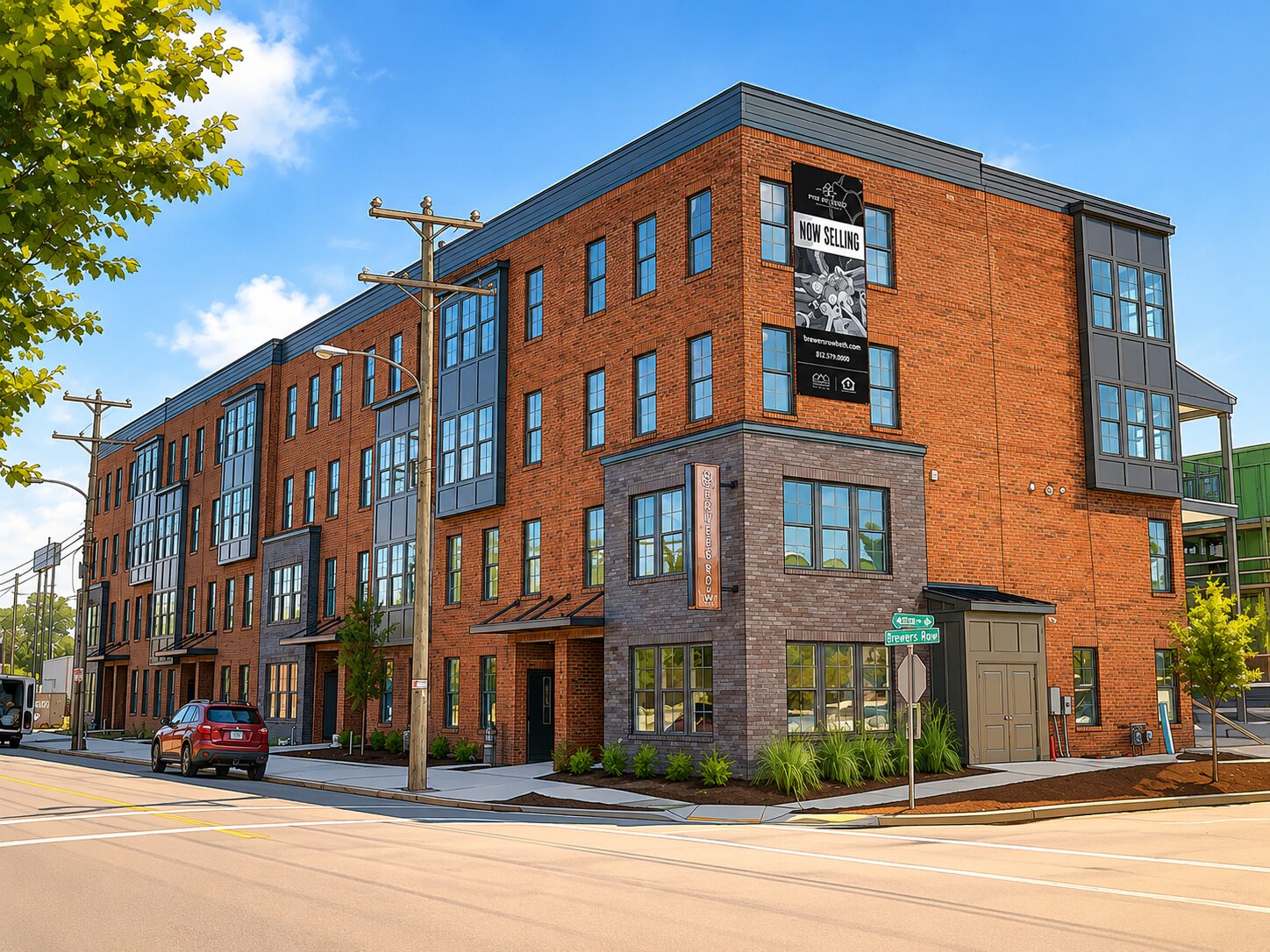
The Outpost at Brewers Row — 32 units delivered in 2020, in the heart of the brewery district.
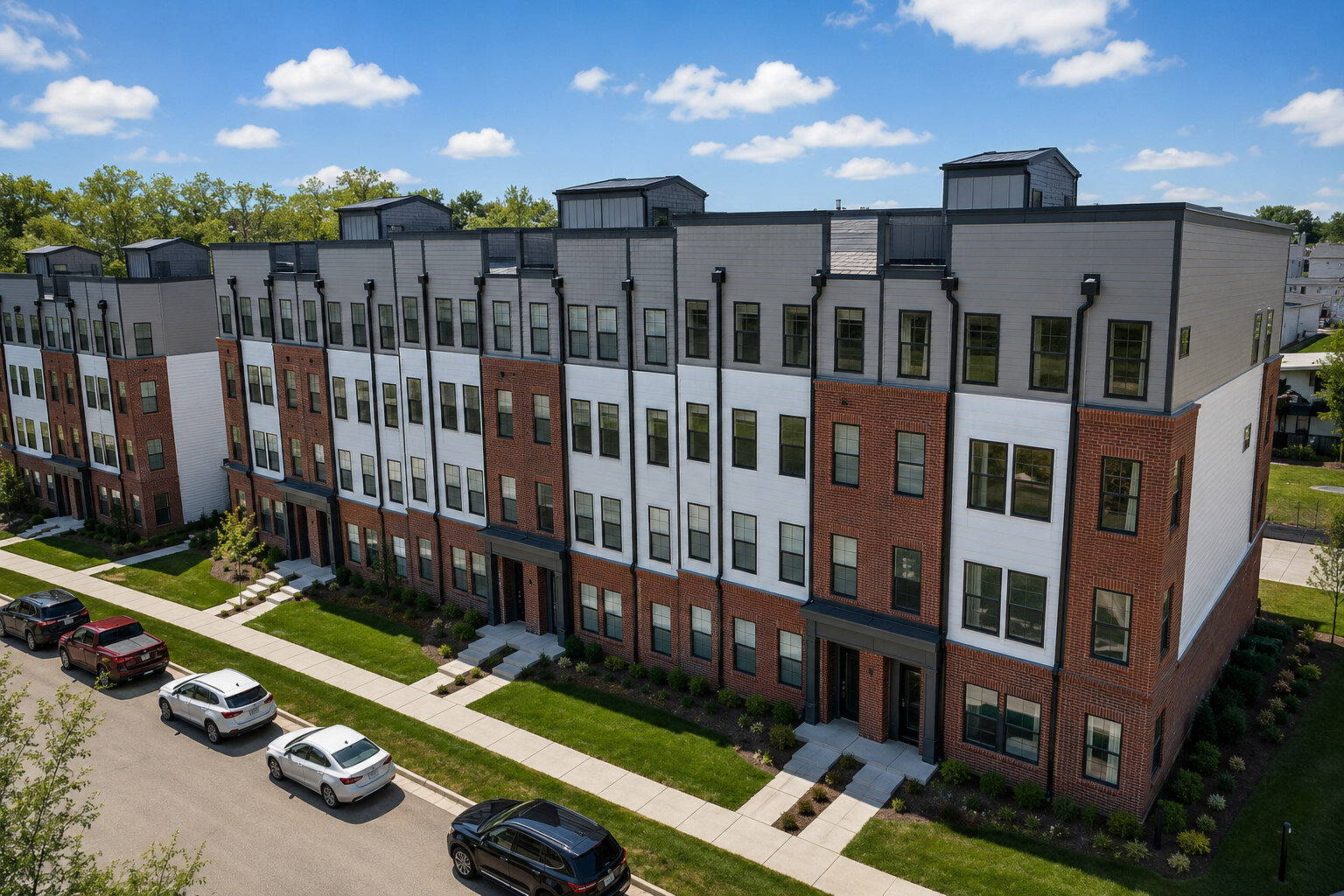
Coalfield Station — the largest of the group by unit count, delivering in phases since 2022.
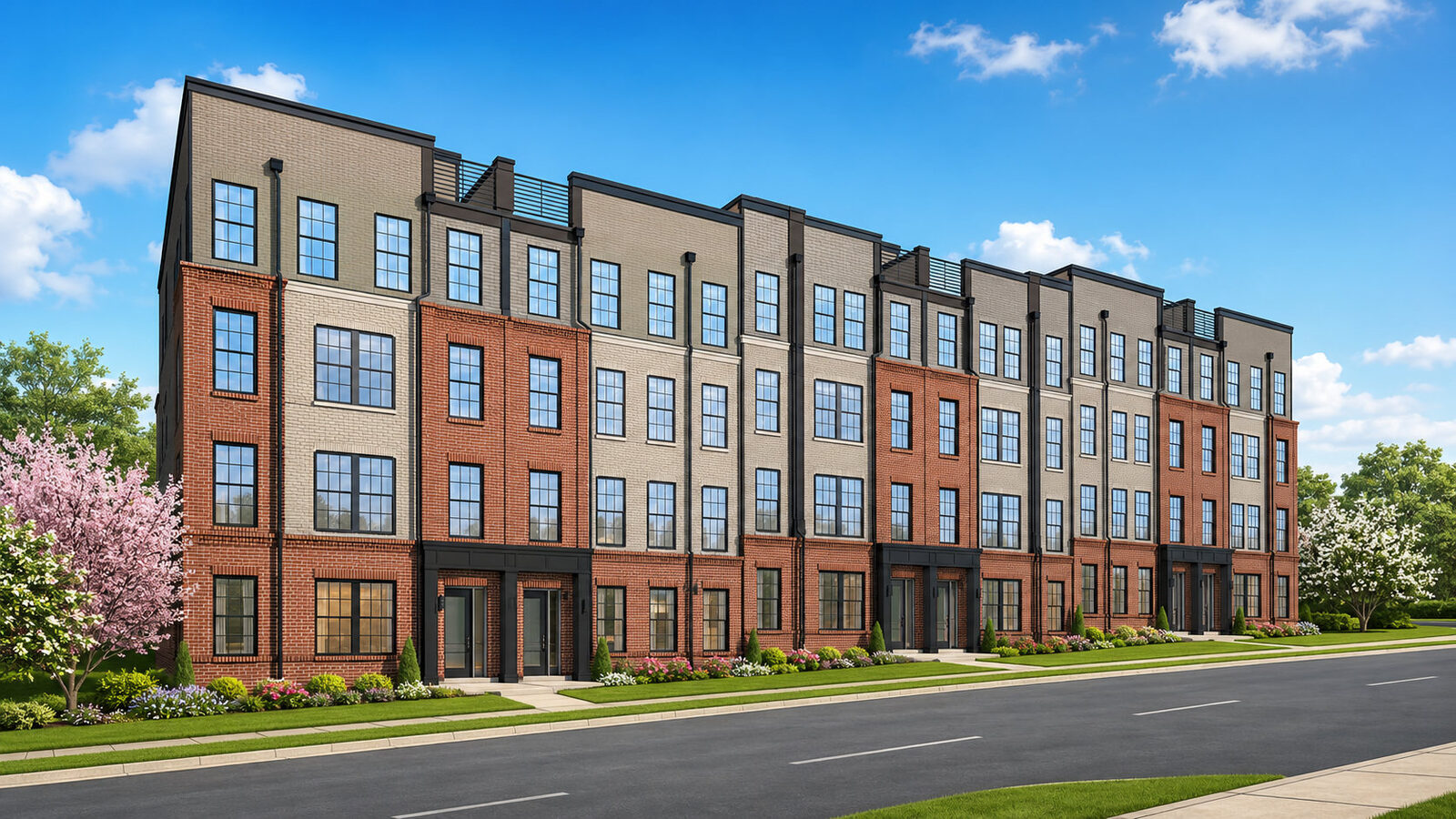
Gayton Village — the newest Stanley Martin condo community in the metro, walkable to a grocery anchor inside a master-planned village.
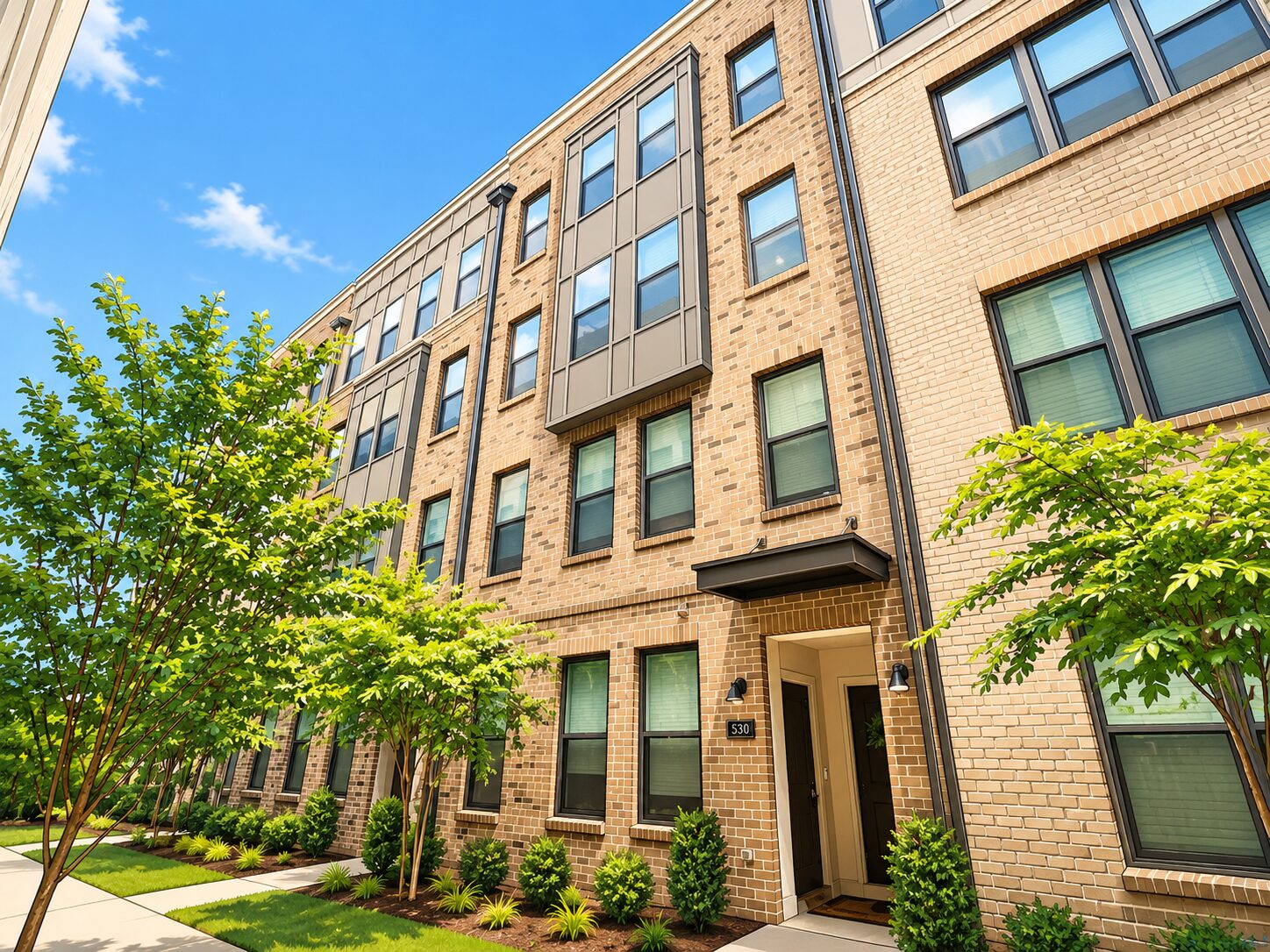
Carver Square — for-sale new construction in a neighborhood where almost everything else is rental or rehab. 2BR–3BR condo plats on N Lombardy, Bowe, and Moore.
These are master-planned communities rather than pure 2-over-2 projects, but both include stacked two-story condo product alongside other housing types in Short Pump: GreenGate and Saunders Station.
Beyond these, pockets of infill throughout the close-in neighborhoods continue to add stacked two-story condo units as builders chase the same land-efficiency math. New ones appear regularly — which is exactly why it’s worth having someone tracking the MLS for you rather than relying on a portal that lags.
(Note: Richmond has many excellent condominiums that are not 2-over-2s — historic conversions, mid-rise and high-rise buildings, and garden-style communities. Those are wonderful in their own right and covered elsewhere on the site. This article is specifically about the stacked two-story format.)
The 2-over-2 is neither the miracle its marketing implies nor the compromise its skeptics claim. It’s a smart, honest answer to Richmond’s central housing problem: too many people who want to live in walkable close-in neighborhoods, too little land, and not enough new construction. It delivers a private-entry, multi-level, brand-new home at a price that actually pencils — and in exchange, you accept shared walls, a flight of stairs, and the responsibilities (and required homework) of condo ownership.
For the right buyer, that’s a genuinely great trade. For the wrong one, it’s a mismatch you’d feel every day. The difference is knowing — clearly and in advance — which buyer you are.
That’s the conversation we love to have. If you’re weighing a specific 2-over-2 community, or trying to decide between the upper and the lower unit, or you just want someone to actually read the condo documents with you before you sign — that’s exactly what we’re here for. Reach out.
— Rick
Educational, not legal, tax, or financial advice. Building details, pricing, and availability change frequently — confirm current specifics and always review the condominium resale documents with your agent and the appropriate professionals before purchasing. Equal Housing Opportunity.